
From “the system’s down” calls to catching issues before users notice


Author: Jamie Litherland,
VP Business Development,
VOSS Solutions
Tuesday June 16, 2026
For many IT teams, the first indication of a communications problem isn’t an alert, a dashboard notification, or an automated workflow. It’s a phone call. And not just any phone call. It’s often from a frustrated executive, a key business stakeholder, or a trading desk manager asking a simple question: “Why isn’t Teams working?”
By the time that call arrives, the damage is already done. Productivity has been disrupted, user confidence has taken a hit, and the IT team is immediately on the back foot, racing to diagnose a problem they didn’t know existed. This scenario is far more common than many organizations would like to admit.
One global financial services firm found itself in exactly this position. Over the course of a single quarter, the organization experienced three significant Microsoft Teams outages that impacted critical communications. Each incident followed a familiar pattern. Users encountered issues first. Senior stakeholders escalated concerns. IT teams then scrambled to identify the root cause.
The challenge wasn’t a lack of monitoring tools. Like many enterprises, the organization had invested heavily in operational visibility. Native Microsoft administration tools were in place. The network team maintained its own monitoring platforms. Service desk teams had their own reporting systems. The problem was that these tools operated independently. Each provided a partial view of the environment, but none delivered a complete picture of the user experience or the health of the organization’s unified communications services.
This is a growing challenge in the modern digital workplace. As collaboration platforms become increasingly business-critical, traditional infrastructure monitoring is no longer enough. Organizations need visibility into the quality and performance of the communications experience itself. Voice quality degradation, media path failures, service anomalies, and emerging performance issues often appear long before a major outage occurs. The challenge is identifying those signals early enough to act on them.
To address this gap, the financial services firm implemented VOSS UC Monitoring across its Microsoft Teams environment. By bringing together voice quality metrics, call detail records, log analytics, and operational alerting into a unified monitoring layer, the organization gained visibility into trends and patterns that had previously gone unnoticed.
Within the first two weeks, the operations team uncovered a recurring issue. Service degradation was consistently occurring before major incidents, typically 20 to 35 minutes ahead of a user-impacting outage. The warning signs appeared as elevated packet loss across specific network segments during peak trading periods. Previously, these early indicators had been invisible. Now they were actionable.
Armed with this insight, the organization fundamentally changed its operational model. Instead of waiting for users to report problems, teams began identifying and responding to issues before they became business disruptors. Alert thresholds were configured to trigger when performance metrics crossed predefined limits, creating an early warning system for emerging incidents. Automated workflows integrated with the IT service management platform ensured investigations could begin immediately, often before end users were aware that anything was wrong.
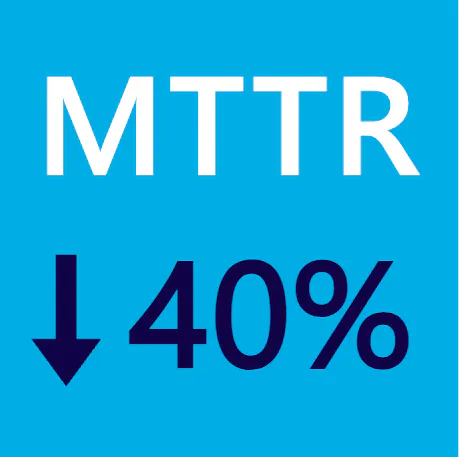
The results demonstrated the value of a proactive approach. Within three months, mean time to resolution (MTTR) had fallen by more than 40 percent. More importantly, the organization eliminated the cycle of user-reported outages that had become all too familiar. Senior stakeholders stopped calling the service desk because they simply weren’t experiencing the disruptions they had before.
This shift represents a broader change occurring across enterprise IT. As organizations become increasingly dependent on platforms like Microsoft Teams, reliability can no longer be measured solely by whether services are available. The real measure of success is whether users experience consistent, high-quality communications that enable them to do their jobs without interruption.
Native vendor tools play an important role, but they are often designed to manage platforms rather than provide deep operational intelligence across the entire communications ecosystem. Enterprises need monitoring capabilities that focus on user experience, service quality, and operational outcomes.
Companies that excel in this area will be the ones that can detect patterns, correlate data, and identify issues before they become visible to the business. If your IT team is still discovering communications issues from end users, it may be time to rethink what effective UC monitoring really looks like. Please get in touch to discuss your UC monitoring strategy.
Keep up to date with our latest blogs and subscribe today